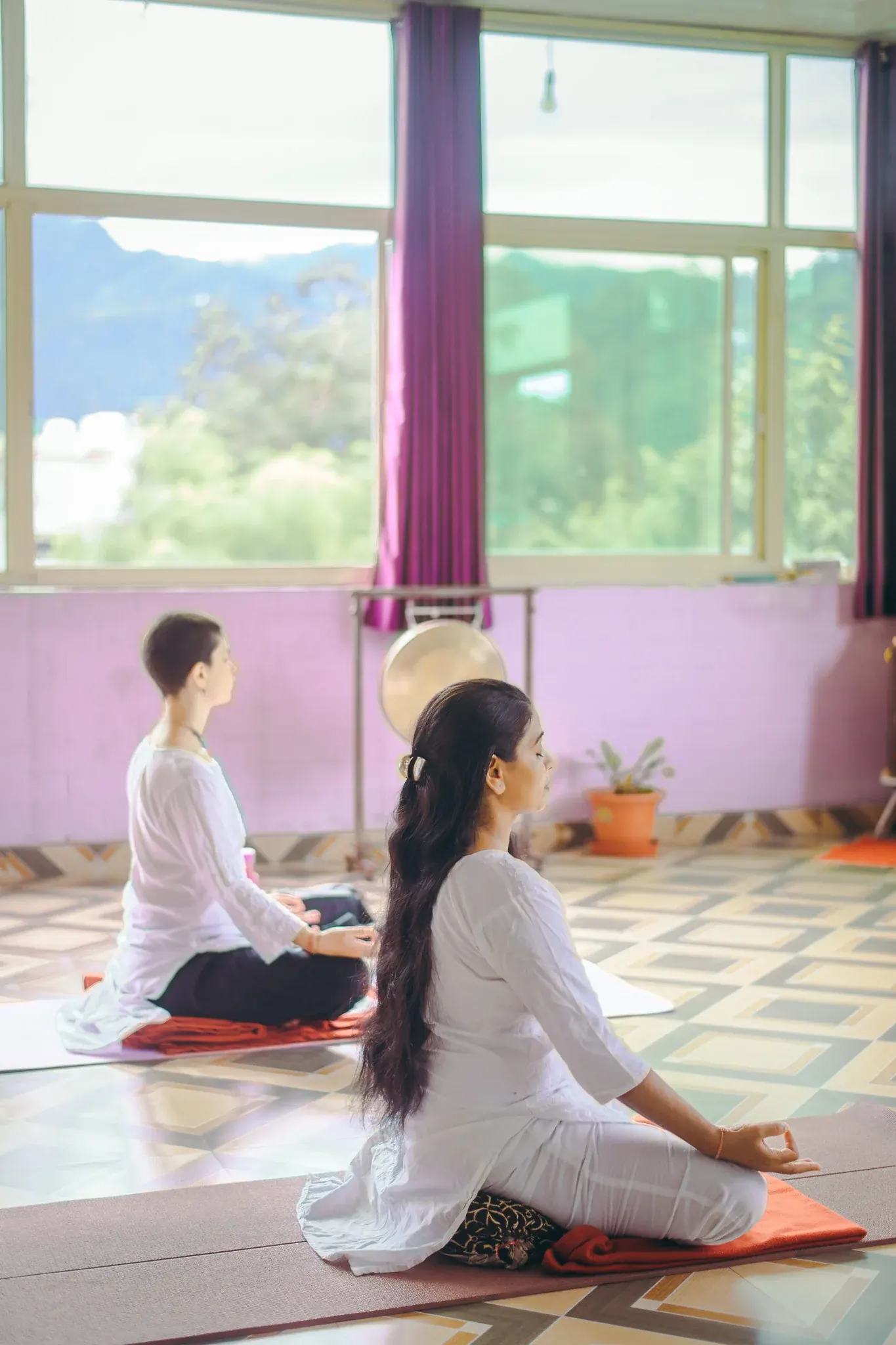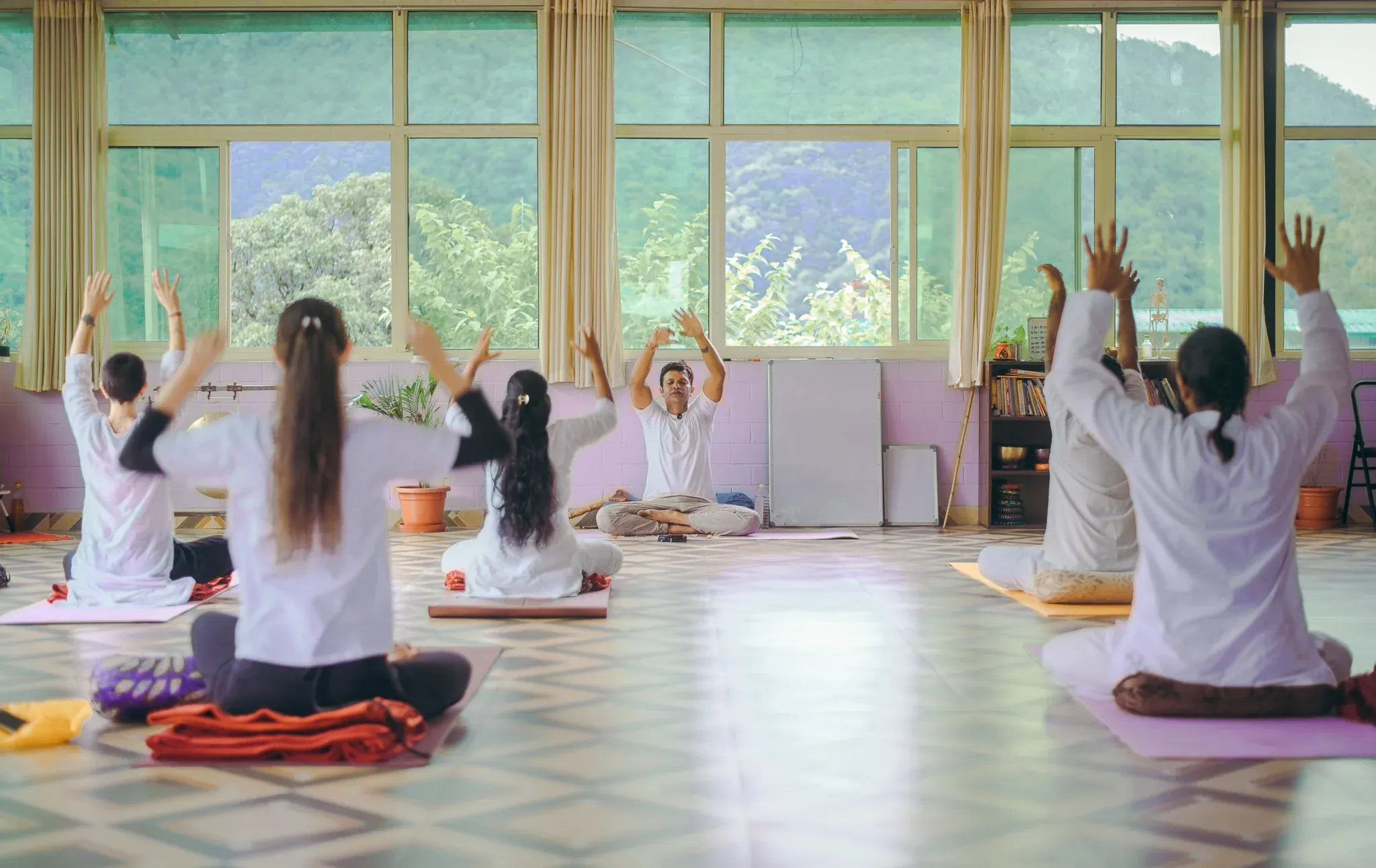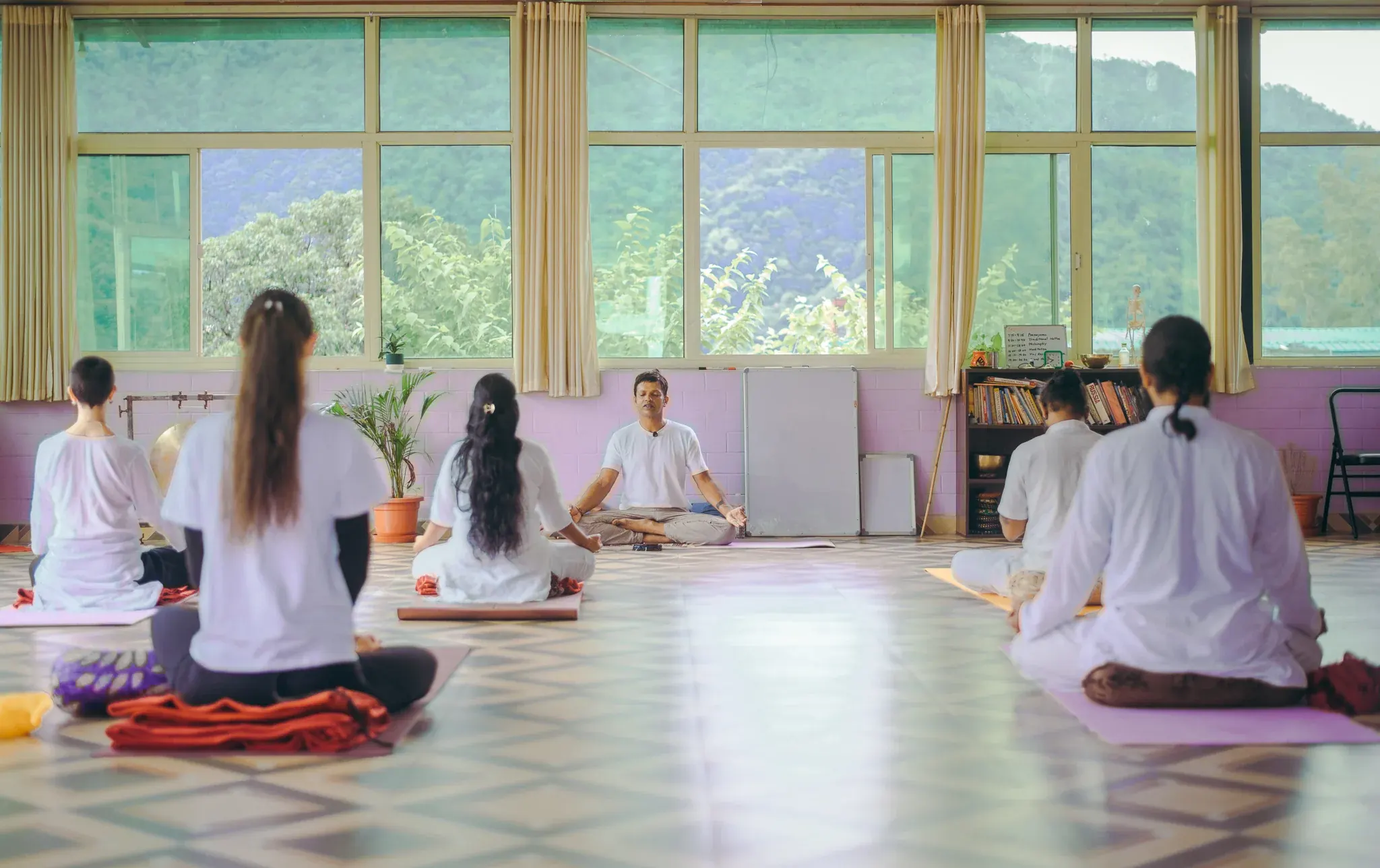
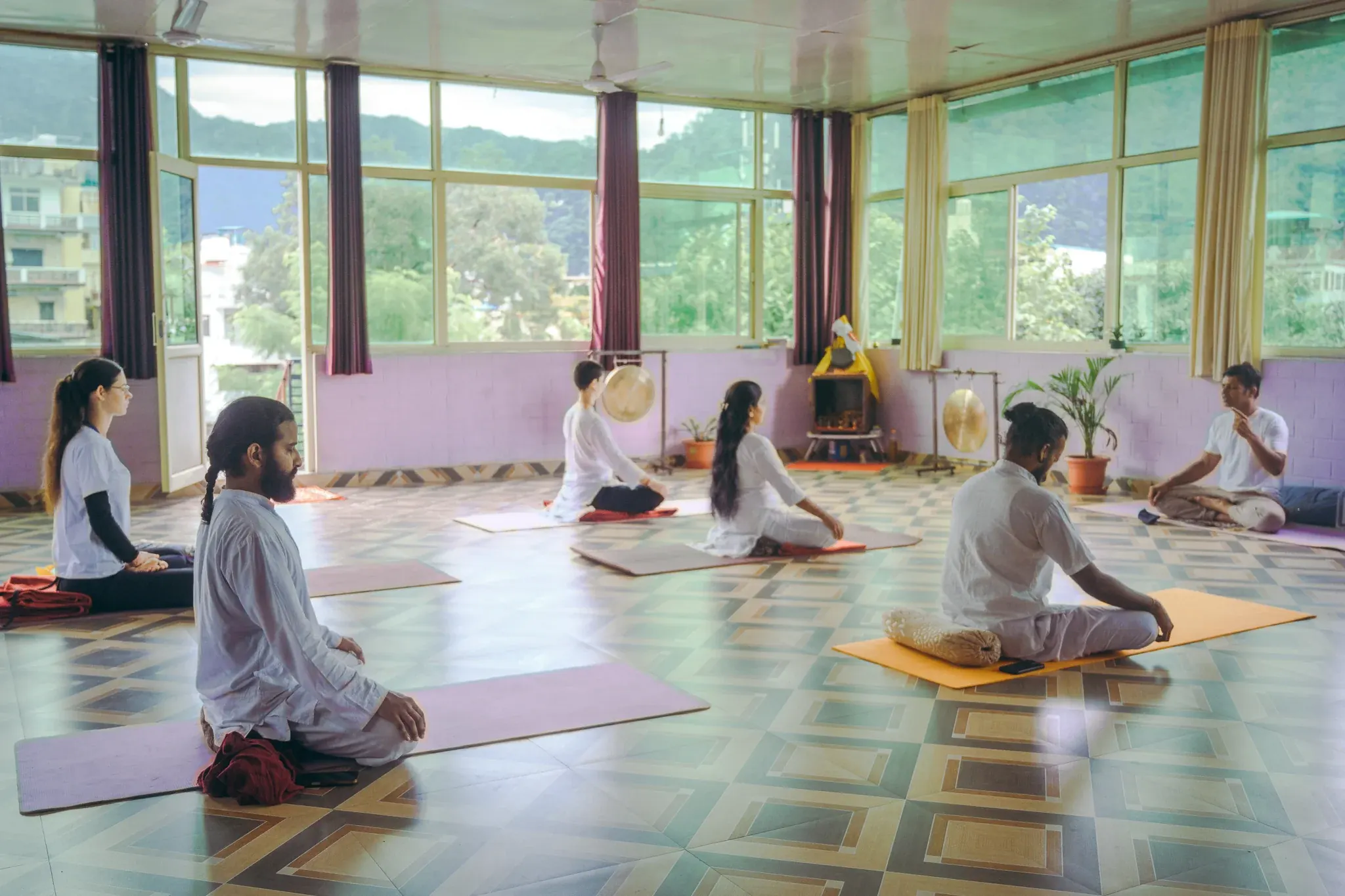
Pranayama practice
The day's practice, guided as a group: the techniques of your course in sequence, with the bandhas, mudras and bija mantras.
Rishikesh · Advanced Pranayama & Yoga Philosophy
The most advanced pranayama and philosophy training in Rishikesh
A course in pranayama and its philosophy, in Lower Tapovan near the Ganga. Choose 7, 15 or 30 days; all three begin together at the start of the month. Tuition from $149.
The 1st is a Sunday, so this cycle begins on Monday the 2nd.
The course
The foundations, with kumbhaka and the bandhas from the first week.
$149₹13,000Tuition only
Every course begins with:
The foundations, then pranayama joined to the bandhas.
$229₹20,000Tuition only
Everything in the 7-day course, plus:
The whole month: every practice, through to the chakra pranayamas.
$349₹30,000Tuition only
Everything in the 15-day course, plus:
All courses start on the 1st of the month (Monday the 2nd when the 1st is a Sunday). Sunday is a rest day. Enroll online with a 20% deposit; the balance is paid on arrival.
Schedule
All three courses begin on the same day and share the same first week. The 7-day course ends after seven days, the 15-day course at mid-month, and the 30-day course runs the whole cycle.
Sunday is a rest day, with no classes.
Starts on the 1st of every month (Monday the 2nd when the 1st is a Sunday).Dates & fees
The practice
Antar and Bahya kumbhaka, the breath held in and held out, are practised with the bandhas from the first week.
In the second week, Kapalabhati and Ujjayi are joined to Mula and Uddiyana bandha, and Bhastrika and deep breathing to Maha bandha.
Practices for the energy channels from the second week; chakra pranayamas in the second half of the month.
The late-morning session includes corrections, so that errors do not settle into habit.
In every course, students observe how each practice influences four areas, and how mudras and bija mantras change it.
I
Attention, mood and the movement of thought: the psychology of each practice.
Is attention steadier, or more scattered?
II
Signs of activation and of settling: heartbeat, warmth, alertness, calm.
Do you feel more alert, or more at rest?
III
Posture, the diaphragm and abdomen, and the felt effect of each bandha.
Where does the breath move, and where is it held?
IV
Prana as yoga describes it: sensations of flow, heat, lightness or stillness.
What moves, and where, while the breath is held?
Philosophy
The philosophy of pranayama is taught every teaching day, in the late-morning session (11:30–13:00), alongside corrections and practice.
You read how classical yoga texts, such as Patanjali's Yoga Sutras and the Hatha Yoga Pradipika, describe the breath and the mind, then test what they say against your own practice.
चले वाते चलं चित्तं निश्चले निश्चलं भवेत् । योगी स्थाणुत्वमाप्नोति ततो वायुं निरोधयेत् ॥
cale vāte calaṃ cittaṃ niścale niścalaṃ bhavet | yogī sthāṇutvam āpnoti tato vāyuṃ nirodhayet ||
When the breath moves, the mind moves. When the breath is still, the mind becomes still, and the yogi attains steadiness. Therefore one should restrain the breath.
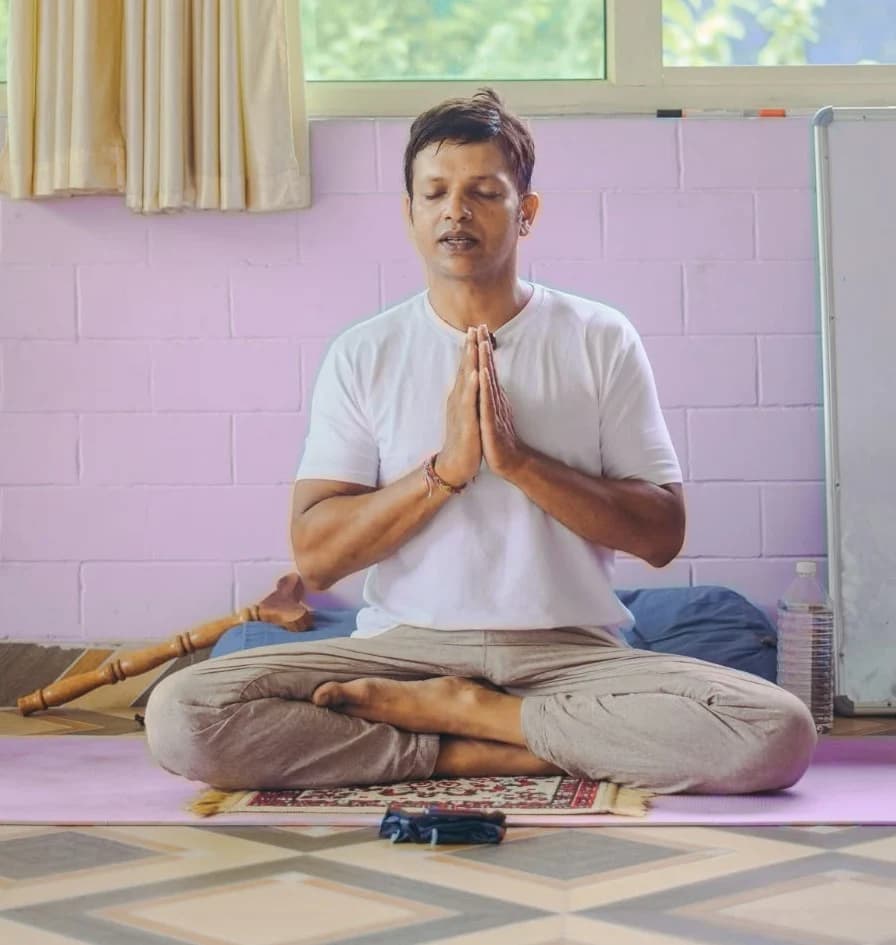
Your teacher
Head Teacher · Yoga, Philosophy & Vedic Chanting
Somashekar has devoted more than fifteen years to the study of yoga, its philosophy and the foundations of dharma.
A scholar of the Vedas, he is known for his Vedic chanting, and for teaching that is precise, disciplined and rooted in traditional practice.
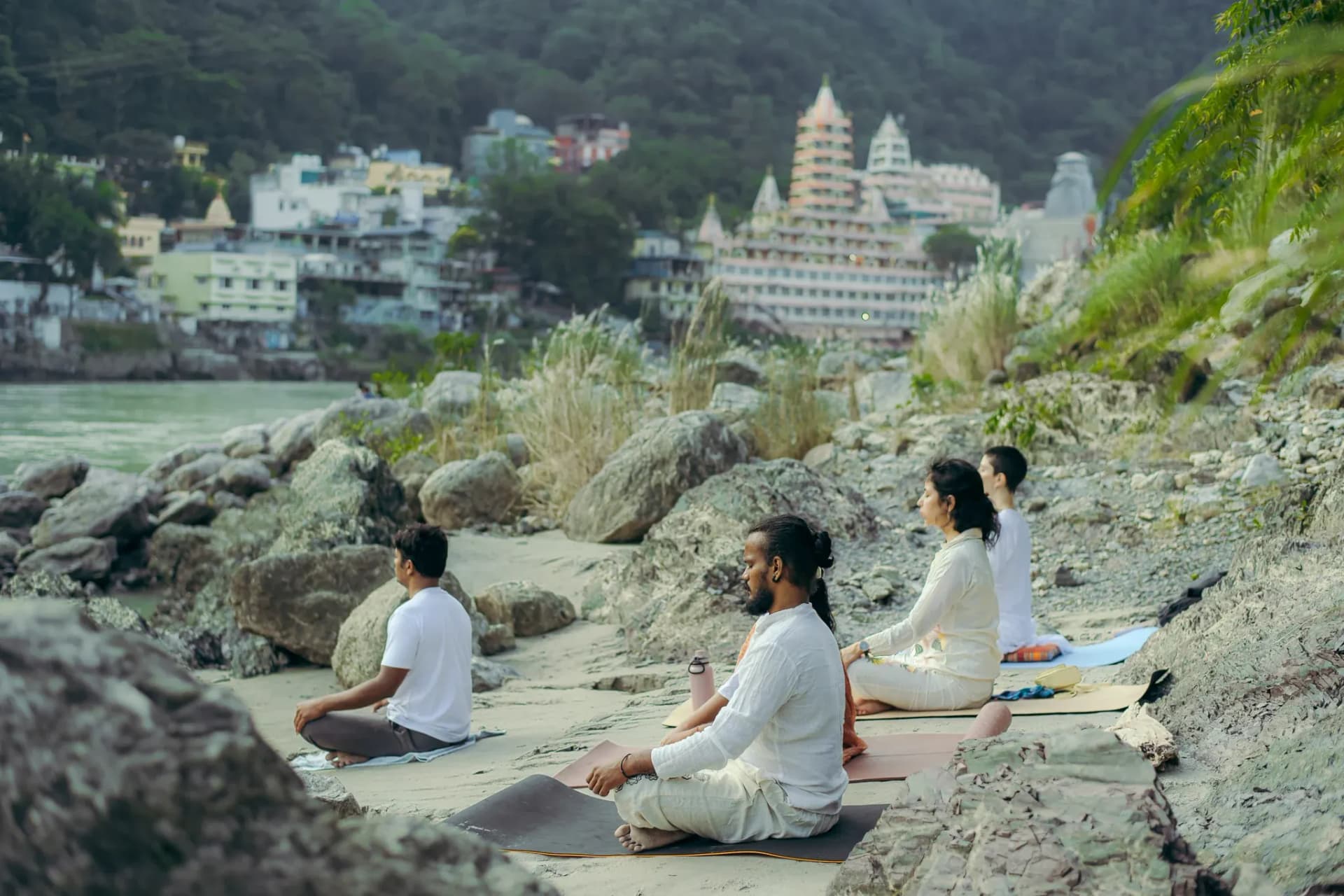
Lower Tapovan, Rishikesh
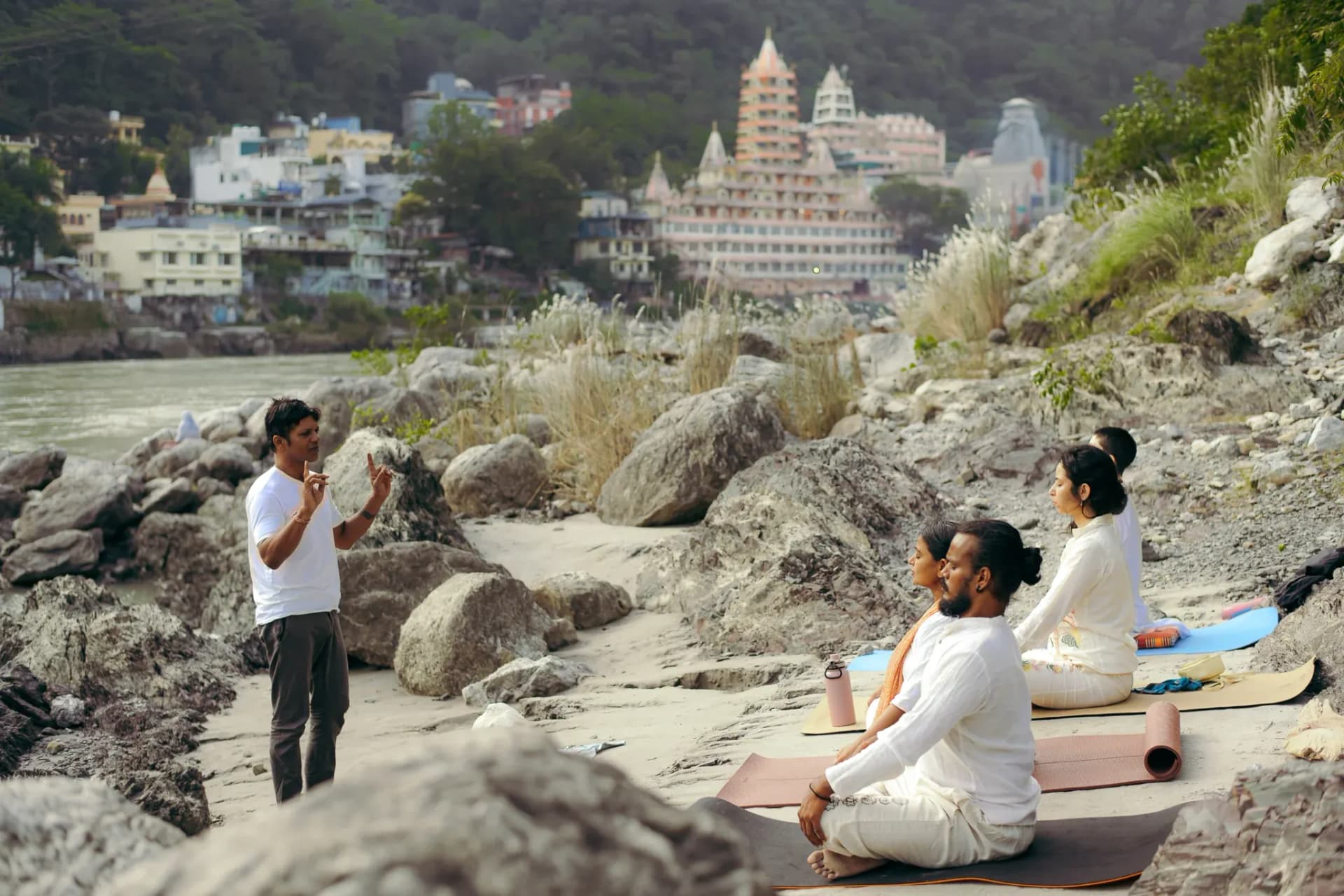
The shala is in Lower Tapovan, Rishikesh, beside the Ganga and a short walk from Laxman Jhula. Dehradun's Jolly Grant Airport is about 22 km away.
Pranayama on the banks of the Ganga, Rishikesh
Voices
5.0 on Google, from 119 reviews
Read all reviews on GoogleAn in-person pranayama course at Anantadrishti Yoga in Lower Tapovan, Rishikesh, taught in English. It runs for 7, 15 or 30 days, with two sessions a day: pranayama practice, then corrections and the science and philosophy of pranayama. Tuition is $149, $229 or $349.
All three courses start together on the 1st of every month, or on Monday the 2nd when the 1st is a Sunday. The next start is 2 November 2026. Sunday is a rest day.
Monday to Saturday: pranayama practice, 07:30–09:00; then corrections, further practice and the science and philosophy of pranayama, 11:30–13:00. Sunday is a rest day.
Seven days gives you the full foundation, including kumbhaka with the bandhas. Fifteen days adds a week of pranayama joined to the bandhas, and the nadi pranayamas. Thirty days adds the advanced practices and the chakra pranayamas, with time for each stage to settle. Tell us about your practice and we will suggest one.
Some prior yoga or breathing practice helps. Healthy, sincere beginners can join the 7-day course. Tell us about your experience when you enquire, and we will help you choose.
No. Fees cover tuition only. Accommodation can be arranged nearby in Tapovan, and we help you find a room when you enquire.
No. It is an in-depth practitioner course: it teaches pranayama, the bandhas, mudras, bija mantras and the philosophy behind them for your own practice. It is not a yoga teacher training and does not lead to a teaching qualification.
No. Philosophy is woven into the pranayama course: the daily late-morning session covers the science and philosophy of pranayama, alongside corrections and practice.
Enquire
Prefer to talk? Message us on WhatsApp.
Message us on WhatsAppAlready decided? Hold your place online with a 20% deposit, charged in rupees.
Enroll nowAccommodation can be arranged nearby, and we help you find a room.
Also at the school
Looking for a retreat rather than a course? Our shorter yoga and pranayama retreats in Rishikesh run separately from the course.
See all retreatsFree guides to practices you will meet in the course.